
Things to Check Before Buying a Used or Tokunbo Car in Nigeria
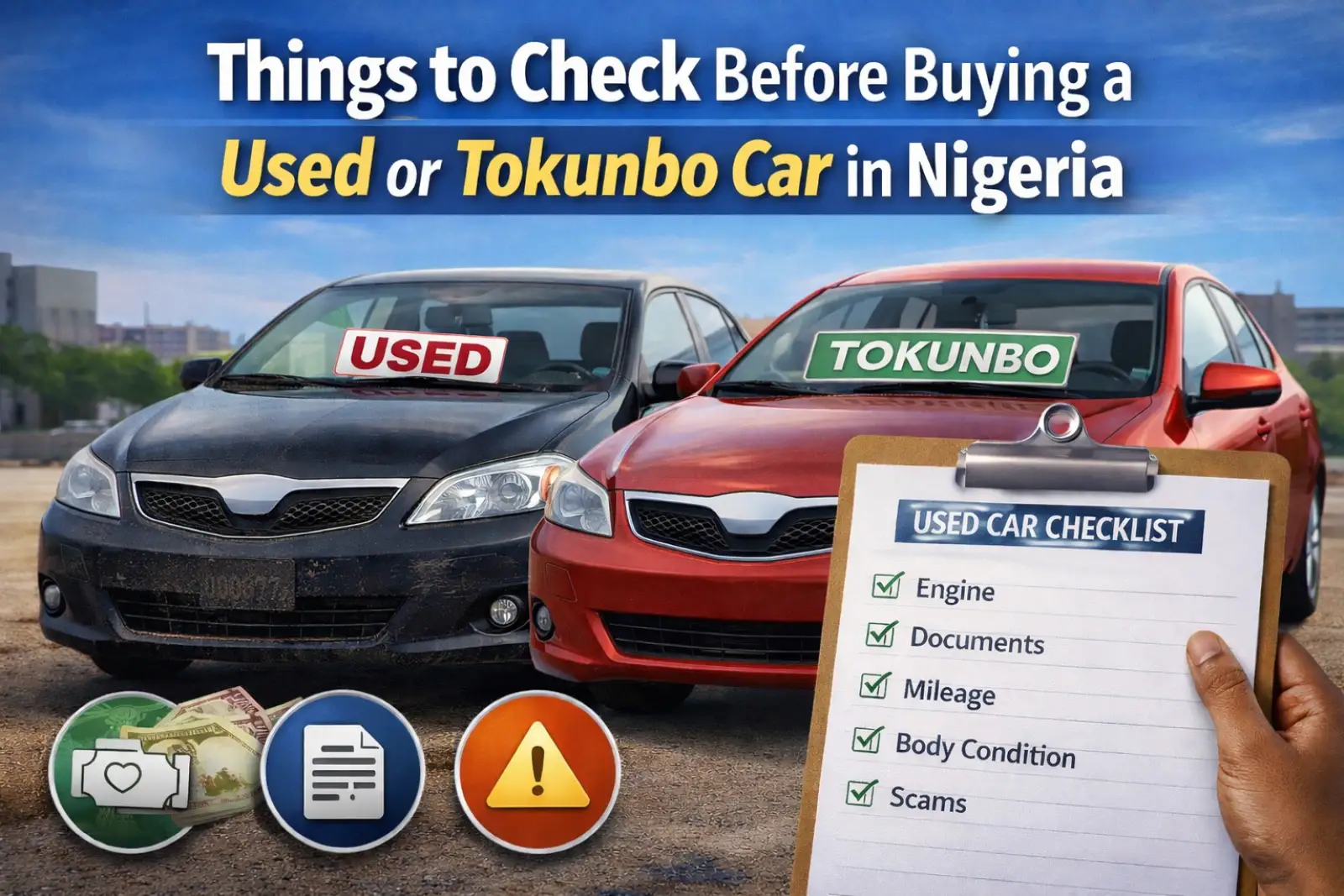
Buying your first car in Nigeria is a milestone. It promises freedom from crowded buses, with the A/C on full blast. However, many find their dream 'Tokunbo' car becomes a financial drain due to constant, expensive repairs. The biggest cost of a used car isn't the purchase price; it's the maintenance that follows.
This guide is built for everyone, not just mechanics. It will give you a straightforward checklist to spot major red flags, from signs of a hidden accident to verifying paperwork. Use this to tell a reliable ride from a money pit and ensure your car purchase is a success story.
Tokunbo vs. Nigerian-Used: What’s the Real Difference?
Your first decision is between a "Tokunbo" (foreign-used) or a "Nigerian-used" car. Tokunbo cars are imported directly and often seem to be in better mechanical shape, having been driven on smoother roads with more consistent maintenance. This is why they typically command a higher price.
However, the risk with Tokunbo cars is their unknown history. A shiny exterior could hide flood damage from a hurricane or a poorly repaired accident. With a Nigerian-used car, you have a better chance of tracing its local history. While it has seen our roads, its problems are often more straightforward and it's generally more affordable.
The choice is a trade-off between potentially better mechanics and a riskier, unknown past. A great Nigerian-used car is often a safer bet than a questionable Tokunbo. The most important skill isn't choosing a category, but inspecting any car for trouble.
The 5-Minute Exterior Check: How to Spot a Past Accident
Before the shine impresses you, step back and look at the car’s panel gaps, the spaces between body parts like the bonnet, fenders, and doors. Are they even? A gap that's wide on one side but tight on the other is a classic sign of a poorly repaired accident.
Next, focus on the paint, especially if the seller claims it’s “first body.” This term means it has its original factory paint. Look at the car in bright sunlight for slight color differences between adjacent panels. Mismatched paint is a giveaway that a section was repaired or repainted.
Finally, check the tires. Look for the small, raised bars inside the main tire grooves, known as tire wear indicators. If the tire surface is worn down to the level of these bars, the tires are finished and need immediate replacement—a significant cost to add to your budget.
The Interior Smell Test: Your Defence Against Flood-Damaged Cars
When you open the door, take a moment to breathe in. Be suspicious of a very strong air freshener, as sellers often use it to mask a damp, musty odor—the unmistakable smell of mould and mildew from flood damage. This is a common issue with foreign-used vehicles and can lead to a nightmare of electrical and rust problems.
Confirm what your nose suspects with this 3-step flood check:
- Lift the Mats: Lift the floor mats and trunk carpet. Press your hand on the carpet underneath. Is it damp? Are there water stains on the floor pan?
- Check the Boot: Look in the spare tire compartment. Water often collects here, leaving behind rust or a tidemark.
- Inspect the Seat Rails: Use your phone’s flashlight to look at the metal rails the front seats slide on. This area is rarely cleaned. If you see flaking rust, the car has almost certainly been in a flood. Walk away immediately.
Under the Bonnet: 3 Simple Checks for Non-Mechanics
You don’t need to be an expert to spot major engine trouble. First, check the engine oil. Find the dipstick (usually with a yellow or orange ring), pull it out, wipe it, dip it back in, and pull it out again. The oil should be golden-brown or black. If you see a creamy, light-brown sludge like milky coffee, stop. This means water is mixing with the oil—a sign of a catastrophic engine problem. Walk away.
Next, check the transmission fluid. The dipstick is often red or black. The fluid should be bright red or pinkish. If it's dark brown or black and has a burnt smell, you’re looking at a potential gearbox failure, one of the most expensive repairs on any car.
Finally, glance at the black rubber belts at the front of the engine. Look for visible cracks, fraying, or splitting. While cracked belts aren't a deal-breaker, they will need replacing soon, adding to your initial costs.
The Test Drive Checklist: What to Feel and Hear
The test drive is where a car reveals its expensive secrets. Pay attention to how the car changes gears. Does the engine rev high before lurching forward? That feeling is transmission slippage, signaling a massive repair bill is in your future. A healthy car accelerates smoothly.
Next, find an open area to test the steering. Turn the wheel all the way to one side and drive slowly in a circle, then repeat in the opposite direction. Listen for a rhythmic "k-k-k-k" clicking sound from the front wheels. That noise indicates a bad CV joint, a common and costly repair.
Finally, check the brakes in a safe spot. A good brake pedal feels firm. If the pedal feels soft or "spongy" and travels almost to the floor before the car slows, you have a serious safety issue.
Don't Buy a Lawsuit: Verifying Car Documents
A perfect test drive is meaningless without correct paperwork. Buying a car with faulty documents sets you up for trouble with the Police, VIO, or FRSC. For any Tokunbo car, the two most important documents are the Bill of Lading and the Customs Duty papers. The Bill of Lading shows its journey to Nigeria, and the Customs papers prove the import tax was paid.
Insist on seeing the originals. Be wary of sellers who only offer photocopies, which can be easily faked and offer no legal protection if the car is flagged as smuggled. Without original documents, you risk having your car seized.
Once the customs papers are verified, the final step is the transfer of ownership through the VIO car registration process. A serious seller will have all the necessary documents for a smooth transfer.
You’ve Found a Good Car—Now Get a Good Price
You now have the skills to look past the shiny paint and listen beyond the seller's pitch. As you browse for affordable pre-owned vehicles, on Marketplace Naija, use any small issues you find—like a worn tire or a weak A/C—as negotiating leverage.
Your most powerful move, however, is to insist on a final check from your trusted mechanic once you're serious about a car. This non-negotiable step separates a smart purchase from a story of regret. The best negotiating tool you have isn't a lowball offer; it's the quiet confidence to walk away from a deal that doesn't feel right. The market is full of options. Your perfect car is out there waiting for you—not the other way around.