
What to Check Before Buying a Used Generator in Nigeria
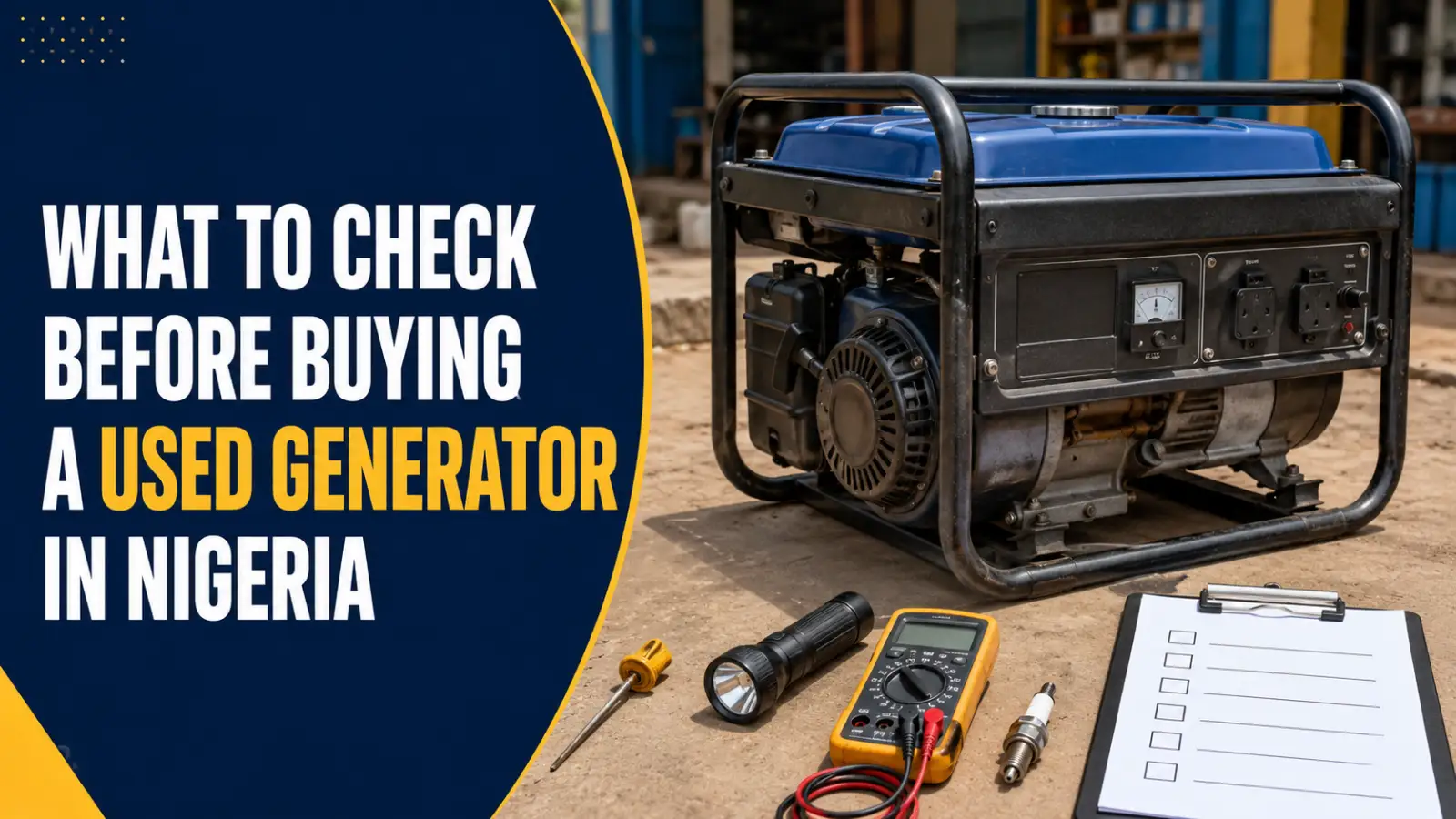
Buying a used generator in Nigeria can help you save money, especially when the price of a new one is beyond your budget. However, a cheap generator can quickly become expensive if it has a weak engine, damaged alternator, excessive fuel consumption or unavailable spare parts.
A freshly painted body does not necessarily mean the generator is in good condition. Some sellers clean or repaint old generators to hide rust, oil stains and signs of heavy use. Before paying, you must inspect the generator properly and test it under load.
This guide explains what to check before buying a used generator in Nigeria and how to avoid purchasing a machine that will require constant repairs.
1. Know the Amount of Power You Need
Before looking at available generators, list the appliances you want to power. These may include lights, fans, televisions, refrigerators, freezers, computers, water pumps or air conditioners.
Check the wattage of each appliance and consider that equipment with motors or compressors may require additional power when starting. A generator that is too small may struggle, overheat or shut down when several appliances are connected.
Do not buy a generator simply because the seller says it can “carry everything.” Ask for its rated output in watts or kilovolt-amperes and confirm whether that capacity is suitable for your needs. If you are uncertain, ask a qualified electrician to calculate your expected load.
2. Confirm the Brand and Model
Check the generator’s brand, model number and serial number. Search for information about the model and determine whether replacement parts are readily available in Nigeria.
Some uncommon generators may be affordable to purchase but difficult to maintain. If the carburettor, control board, automatic voltage regulator or other important component fails, you may struggle to find the correct replacement.
Inspect the identification plate carefully. Missing, damaged or altered model information should be treated cautiously. Ask the seller why the label is no longer available and avoid paying until you can confirm what you are buying.
3. Inspect the Generator’s Physical Condition
Examine the frame, fuel tank, engine, control panel, sockets, wheels and protective covers. Look for:
-
Heavy rust or corrosion
-
Cracks in the fuel tank
-
Loose or exposed wires
-
Broken switches and sockets
-
Missing bolts or covers
-
Signs of oil or petrol leakage
-
Burnt areas around the wiring
-
Poor welding or major frame repairs
Minor scratches may be normal on a used generator, but serious rust, melted wires and improvised electrical repairs can indicate neglect or unsafe use.
Check underneath the generator for fresh oil stains. A seller may wipe the engine before your arrival, so allow the generator to run for some time and inspect it again for leaks.
4. Check the Engine Oil
Remove the dipstick and inspect the oil level and condition while following the manufacturer’s procedure. Very low oil may suggest poor maintenance, while thick, dirty oil can indicate that servicing has been delayed.
Metal particles in the oil are a serious warning sign because they may point to internal engine wear. Milky oil may also indicate contamination.
Clean-looking oil does not guarantee that the engine is healthy because the seller may have changed it shortly before the inspection. Treat the oil check as one part of the complete assessment rather than the only test.
5. Start the Generator From Cold
Ask the seller not to warm the generator before you arrive. A cold start gives you a better idea of the engine’s true condition.
The generator should start without excessive effort and settle into a steady sound. Be cautious if it requires repeated pulling, continuous choke adjustment or several attempts before starting. These problems may be related to the spark plug, carburettor, fuel system, compression or general engine wear.
If the generator uses an electric starter, test it. Also check whether the recoil starter works, as you may need it if the battery becomes weak.
6. Observe the Exhaust Smoke
Watch the exhaust when the generator starts and while it is running. A small amount of temporary smoke during startup may not always indicate a serious problem, but continuous smoke should be investigated.
Persistent blue smoke may be associated with oil entering the combustion chamber. Black smoke can indicate incomplete combustion or an overly rich fuel mixture. Continuous white smoke can also signal a fault, depending on the engine and operating conditions.
Honda’s generator guidance notes that excess engine oil can reach the air cleaner and cause white or blue smoke. Therefore, smoke should be assessed by an experienced technician instead of relying on colour alone.
7. Listen for Unusual Sounds and Vibration
A used generator will make normal engine noise, but knocking, rattling, grinding or irregular sounds may indicate worn internal components, loose parts or bearing problems.
Observe how much the generator vibrates. Excessive movement may be caused by damaged engine mounts, an unstable frame or an internal mechanical issue.
Let the generator run long enough to become warm. Some faults only become noticeable after several minutes, so do not complete the inspection after a quick startup.
8. Test It With a Realistic Load
Never buy a used generator based only on its ability to start. A generator can run smoothly without a load but fail when appliances are connected.
Test it with equipment that represents the kind of load you intend to use. Add appliances gradually while observing the sound, voltage and stability. The generator should not repeatedly surge, dim the lights, produce an unstable output or shut down.
Ask an electrician or generator technician to use the appropriate testing equipment where possible. Do not overload the machine during the inspection or use unsafe wiring arrangements.
9. Check the Sockets and Output
Inspect every power outlet, switch, circuit breaker and indicator on the control panel. Test the sockets instead of assuming they work.
An unstable output can damage televisions, refrigerators, computers and other sensitive appliances. If the generator has a voltmeter, observe its reading, but do not depend entirely on the built-in meter. A technician can confirm the output with suitable equipment.
Avoid any generator with burnt sockets, bypassed circuit breakers or exposed electrical connections until it has been professionally assessed.
10. Examine the Air Filter and Fuel System
Open the air-filter compartment and check whether the filter is clean, intact and properly fitted. A damaged or badly clogged filter may show that the generator has not been maintained correctly. Manufacturer guidance warns that a dirty air filter can restrict airflow and reduce engine performance.
Inspect the fuel tank for rust, dirt and leakage. Look at the fuel hose, tap and carburettor area for signs of damage or temporary repairs. Ask whether old fuel has been left inside the generator for long periods, as this can contribute to fuel-system problems.
11. Ask About Its History
Ask the seller why the generator is being sold, how long it has been used and what repairs have been completed. Find out whether it was used occasionally in a home or operated for long hours in a shop, office or construction environment.
Request servicing records, purchase documents and the original manual if available. You should also confirm whether the seller is the legitimate owner.
Compare the price with similar listings before negotiating. You can find generators and other products for sale on Marketplace Naija and compare available options by condition, capacity and location.
12. Take a Technician With You
Unless you understand generator engines and electrical systems, take an experienced technician to inspect the machine. The cost of an inspection is small compared with the expense of replacing an engine, alternator or control system after purchase.
Do not use only the seller’s technician. An independent professional is more likely to give you an objective opinion and estimate any repairs that may be required.
Use the Generator Safely After Purchase
Even a generator in good condition can be dangerous when operated incorrectly. Never run a portable generator inside a house, shop, garage or other enclosed space. Carbon monoxide is colourless and odourless and can cause fatal poisoning.
The US Consumer Product Safety Commission’s generator guidance recommends operating portable generators outdoors, at least 20 feet away from homes, with the exhaust directed away from doors, windows and vents. Follow the manufacturer’s instructions and use a qualified electrician for any connection to a building.
Conclusion
When buying a used generator in Nigeria, do not focus on appearance and price alone. Confirm the capacity, inspect the engine, check for leaks, start it cold and test it with a realistic load. You should also verify that spare parts are available and have an independent technician examine it before payment.
A careful inspection can help you avoid hidden faults and repeated repair costs. If you have a generator or another item to offer buyers, you can sell used products online in Nigeria by creating a clear listing with accurate specifications, honest condition details and quality photographs.