How to Verify Online Sellers In Nigeria
The digital revolution has transformed the way Nigerians shop. From the bustling streets of Lagos to the quiet corners of Uyo, e-commerce has brought the world to our fingertips. However, with the convenience of Instagram vendors, Jumia shops, and Jiji listings comes a significant risk: the "What I Ordered vs. What I Got" phenomenon, or worse, outright financial scams.
Safe digital commerce relies on transparency and trust. To help shoppers navigate the complexities of online transactions, this comprehensive guide outlines the essential steps to verify online sellers in Nigeria before making a payment.
The Social Media "Vibe" Check
Most online shopping in Nigeria happens on Instagram, Facebook, and Twitter (X). While a high follower count looks impressive, it is often the easiest thing to fake. In the Nigerian digital space, "buying followers" is a cheap and common service, meaning numbers alone are no longer a badge of credibility.
Look at Engagement, Not Just Followers
A page with 100,000 followers but only 10 likes per post is a massive red flag. This usually means the followers were bought. Real businesses have active engagement. Look for comments that aren't just emojis or "How much?" Look for actual conversations between the brand and its customers. Pay attention to how the seller responds to complaints in the comment section. If they delete negative comments or respond with aggression, that is a sign of poor business ethics.
Check the "About This Account" Feature
On Instagram, you can go to a profile, click the three dots in the top right, and select "About This Account." This reveals critical data points:
-
Date Joined: Scammers often create new accounts once old ones are reported and banned. If a "Big Luxury Brand" joined Instagram only three weeks ago, be extremely cautious.
-
Account Location: If a "Lagos-based" vendor is actually operating from a different country (like Eastern Europe or Southeast Asia), be wary. While some drop-shippers are legitimate, many scammers use foreign locations to hide their identities.
-
Former Usernames: If the account has changed its name five times in the last year (e.g., from @BettingTips to @LuxuryHairLagos), they are likely running from a bad reputation or have bought an existing account to skip the "growth" phase.
Verify Corporate Affairs Commission (CAC) Registration
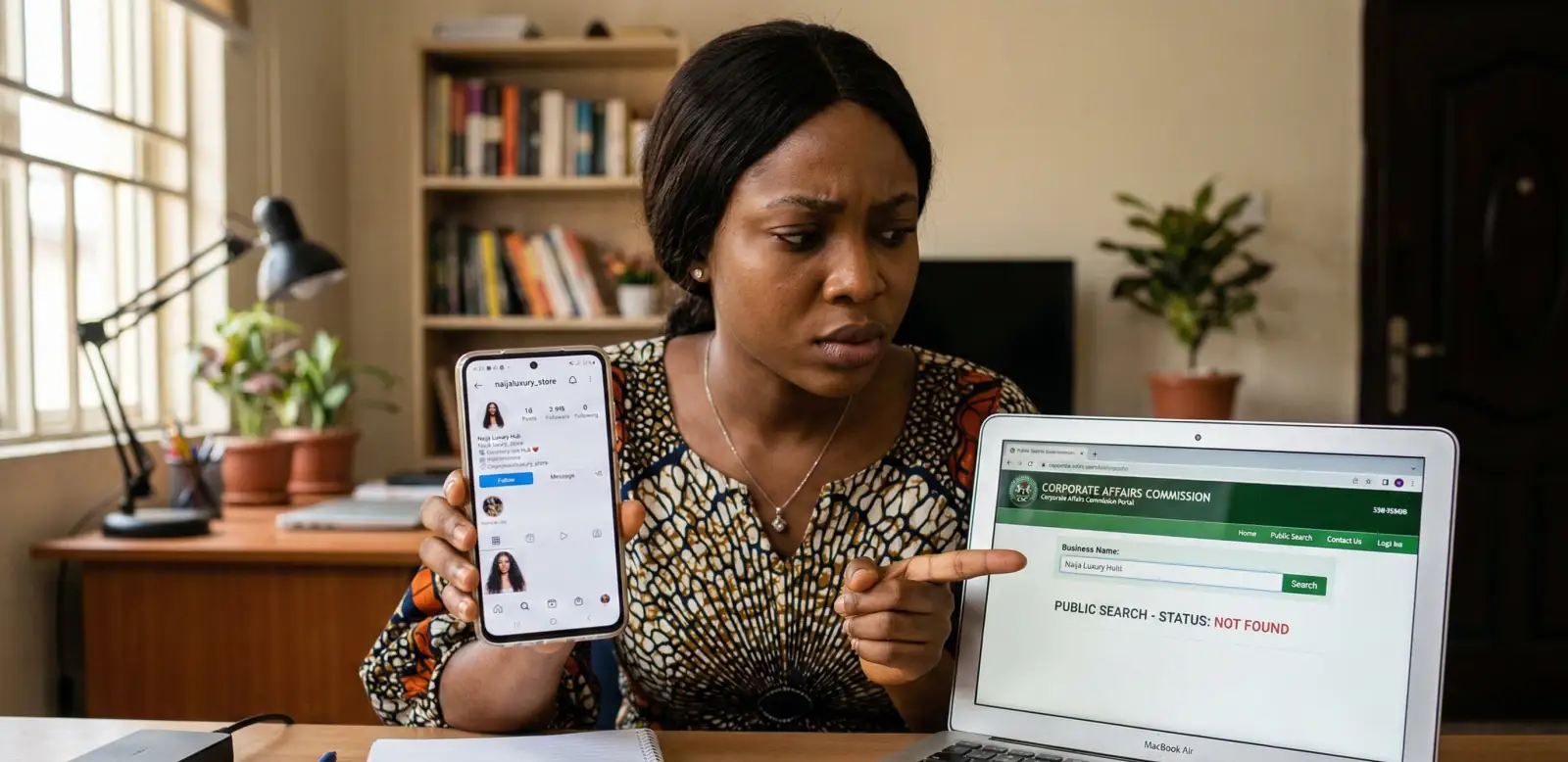
In Nigeria, any serious business should be registered with the Corporate Affairs Commission. While being "CAC Registered" doesn't automatically make a seller honest, it provides a layer of legal accountability. A registered business is a traceable business.
How to Check:
Don't just take their word for it or look at a screenshot of a certificate (which can be Photoshopped). Many scammers steal certificates from legitimate businesses and edit the names.
-
Go to the CAC Public Search portal.
-
Enter the business name exactly as provided.
-
If it doesn't appear, or the status says "Inactive," proceed with extreme caution. An "Inactive" status usually means the company hasn't filed its annual returns, which suggests the business might be abandoned or non-compliant with Nigerian laws.
The "Search and Destroy" Method (Social Media Background Checks)
The Nigerian "Online Police" (angry customers on Twitter/X) are very efficient. Before buying, use the search bar on X or Facebook. Social media is the modern-day "town square" for reporting grievances.
Search for these combinations:
-
"Business Name + scam"
-
"Business Name + fraud"
-
"Business Name + disappointed"
-
"Phone Number"
If someone has been scammed by that vendor, they have likely posted about it. Scammers often change handles, but they rarely change their bank account numbers or phone numbers immediately. Search the account number provided for payment as well. If you find a "Buyer Beware" thread featuring the vendor's bank details, you've just saved yourself from a loss.
Analyze the Contact Information
A legitimate business should have more than just a DM link. A "DM for price" policy is common in Nigeria, but it shouldn't be the only way to reach the seller.
Physical Address
Does the seller have a physical shop or office? Even if they claim to be "Online Only," ask where their warehouse or dispatch point is located. Use Google Maps to verify if the address provided actually exists. If the address points to a random residential building or a vacant lot in a high-density area like Computer Village or Balogun Market, ask for a video of the storefront.
Phone Number Verification
Use apps like Truecaller. If you input the vendor's number and it comes up as "Scammer," "Don't Pick," or a name completely unrelated to the business (e.g., "Baba Blue Scammer"), back away. If they insist on communicating only via WhatsApp and refuse voice calls, that is a massive warning sign. Legitimate businesses usually have dedicated customer service lines.
The Payment Red Flags
Payment is the most critical stage of the transaction. In Nigeria, trust is the currency of the realm. While "Pay on Delivery" (POD) is the gold standard for trust, many legitimate vendors no longer offer it due to high delivery failure rates and security risks to dispatch riders.
Personal vs. Business Accounts
If a business is called "Graceful Fabrics" but asks you to pay into a personal account named "Musa Ibrahim," ask why. Legitimate businesses should have corporate bank accounts (e.g., Graceful Fabrics Ltd). Banking apps in Nigeria usually flag corporate accounts with a "Business" or "Corporate" tag. Paying into a personal account makes it much harder to recover funds through a bank's "Fraud Desk" if things go wrong.
Escrow Services
If you are buying something expensive (like a laptop, a high-end phone, or a designer bag), suggest using an escrow service. Escrow services hold your money in a neutral account and only release it to the seller once you confirm you've received the item and it matches the description. If a seller vehemently refuses a reputable escrow service, they might not intend to send the item at all.
The Psychology of the Scam: Spotting the "Rush"
Scammers rely on overwhelming your logic with emotion. They usually employ two main tactics: Urgency and Exclusivity.
-
Urgency: "I have only one left," "The price changes in one hour," or "Someone else is about to pay." If a seller is pressuring you to pay now without letting you ask questions, they are trying to prevent you from doing your due diligence.
-
Too Good to Be True: If an iPhone 15 Pro Max is being sold for ₦450,000 when the market price is ₦1.8 million, you aren't getting a deal; you are being set up for a "What I Ordered vs. What I Got" disaster or a total loss of funds.
Check Customer Reviews and Tags
Don't just read the "Testimonials" a seller posts on their story they curate those and can easily fake them using "WhatsApp Chat Generators."
-
Check "Tagged" Photos: On Instagram, look at the "Tagged" tab on the seller's profile. Here, you will see posts from real customers who have tagged the brand. If this tab is empty or hidden, it’s a sign they don't want you to see what real people are saying.
-
Google Reviews: If the business is listed on Google My Business, check the reviews there. These are harder to manipulate than Instagram comments. Look for reviews that mention specific details about delivery times and product quality.
Specialized Verification by Category
Different industries in Nigeria have different "standard" scams. Here is how to verify specific items:
Hair and Fashion
-
The "Hand Video": Ask the vendor to take a video of the hair or dress while holding a piece of paper with your name and today's date written on it. This proves they actually have the physical stock.
-
Video of Texture: For hair, ask for a video of someone combing through it or showing the lace. Scammers often use stock photos of high-quality hair but send synthetic fiber.
Electronics and Gadgets
-
IMEI/Serial Number: For phones or laptops, ask for the IMEI or Serial Number before payment. You can check these online to see if the device is stolen or if the specifications match what is being advertised.
-
Battery Health: For used iPhones, ask for a screen recording of the battery health page.
Request a Live Video Call
In the age of AI and high-quality photo editing, a static picture is no longer enough proof of possession. If you are making a significant purchase, ask the seller for a brief video call to see the product. If they claim their "camera is broken" or they are "too busy," consider it a red flag. A real vendor in a physical shop will have no problem showing you the stock in real-time.
Use Modern Verification Tools
Several Nigerian startups have built tools specifically to verify sellers and protect buyers.
-
ScamScan: A database where you can check for reported numbers and bank accounts.
-
Marketplace Oversight: Always prefer shopping through established and reputable marketplaces. These platforms provide a layer of oversight that a random Instagram DM transaction simply cannot offer. For those looking to establish a legitimate online presence, utilizing dedicated e-commerce platforms can help build necessary trust with a wider audience.
Your Safety is in Your Hands
In the Nigerian e-commerce space, the rule is Caveat Emptor; Buyer Beware. No matter how much you want that dress, gadget, or hair, never sacrifice your financial security for a "flash sale." By checking CAC registration, verifying social media history, and insisting on secure payment methods, you significantly reduce your chances of being scammed.
Remember, a legitimate seller will always be happy to provide the information you need to feel comfortable. If they act "shady," it’s because they probably are.
Stay safe, shop smart, and let's build a more trustworthy marketplace together!