
Building Materials Prices in Nigeria 2026: Cement, Blocks, Iron Rods, Roofing Sheets and More
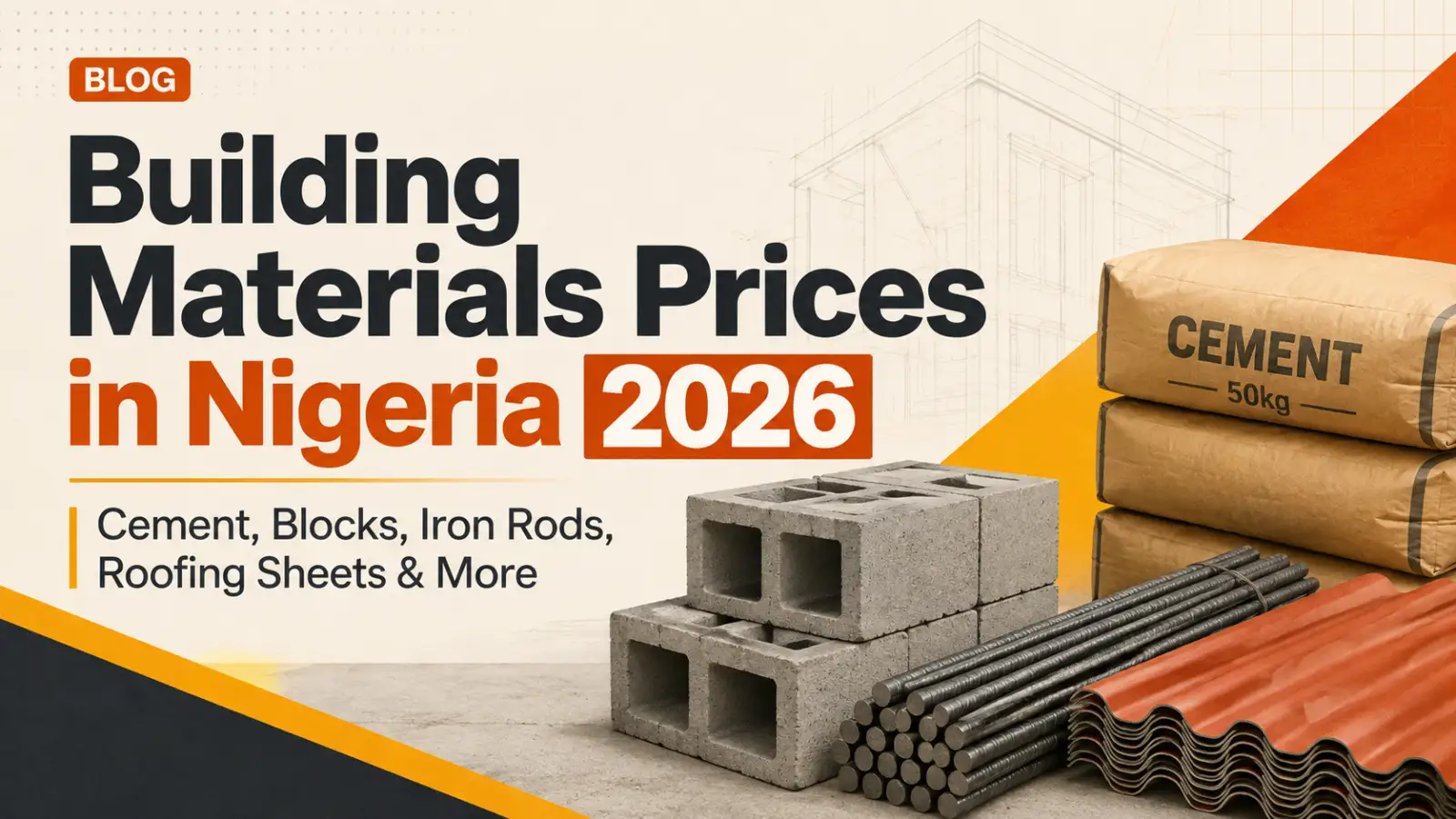
Building a house in Nigeria in 2026 is considerably more expensive than it was only a few years ago. From cement and iron rods to roofing sheets, sand and tiles, the cost of almost every major building material has risen.
The difficult part is that there is no single price that applies everywhere. A bag of cement sold at one price in Lagos may cost more in Abuja, Port Harcourt or another part of the country. Transport costs, exchange rates, energy prices, dealer margins, location and the quantity you are buying all affect the final amount.
If you are building, renovating or supplying a project, this guide gives you a practical idea of building materials prices in Nigeria in 2026 and what you should consider before buying.
You can also compare current building materials for sale in Nigeria from different sellers before making a purchase.
Important: The prices below are indicative 2026 market ranges. Building material prices can change quickly, so always confirm prices with suppliers in your location before preparing a final budget.
Building Materials Price List in Nigeria 2026
|
Material |
Approximate 2026 Price |
|
Cement, 50kg |
₦11,500–₦15,000+ |
|
9-inch block |
₦550–₦700 commonly |
|
6-inch block |
₦450–₦550 commonly |
|
Iron rods |
₦880,000–₦1.1 million+ per tonne |
|
Longspan aluminium roofing |
₦5,000–₦12,500+ per m² |
|
Stone-coated roofing |
₦5,000–₦15,000 per m² |
|
Sharp sand, 20-ton tipper |
₦70,000–₦150,000+ |
|
Granite |
₦280,000–₦660,000 per load |
|
60×60 ceramic tiles |
₦4,500–₦10,000+ per carton |
Prices vary according to location, brand, quality, quantity and supplier.
Cement Price in Nigeria in 2026
Cement remains one of the biggest expenses on most Nigerian building sites.
By mid-2026, a 50kg bag of cement commonly sells for around ₦11,500 to ₦15,000 or more depending on the location and brand.
Popular brands such as Dangote, BUA and HBM may fall at different points within this range. Buyers purchasing trailer loads or directly from major distributors can sometimes negotiate lower prices than someone buying a few bags at retail level.
Cement prices are particularly sensitive to energy costs, transportation, inflation and the cost of imported or foreign-currency-linked inputs.
Before ordering, it is worth comparing cement for sale in Nigeria from different suppliers, especially if you are buying in bulk.
Cost of Blocks in Nigeria
Sandcrete blocks are another major expense, particularly during the foundation and walling stages.
A properly produced 9-inch vibrated block commonly costs around ₦550 to ₦700, although prices in some markets can reach ₦1,000 or more.
A 6-inch vibrated block generally costs around ₦450 to ₦550, with location and cement prices affecting the final amount.
Cheaper blocks are not always a bargain. Poor cement-to-sand ratios, inadequate curing and low-quality production can result in weak blocks.
For structural work, buying from a reputable block producer is more important than simply choosing the cheapest supplier.
Iron Rod Prices in Nigeria in 2026
Reinforcement steel is one of the most expensive components of reinforced concrete construction.
In 2026, a tonne of reinforcement bars commonly costs around ₦880,000 to ₦1.1 million or more, depending on the grade, manufacturer, location and diameter.
Typical retail prices for approximately 12-metre lengths include:
|
Rod Size |
Approximate Price Per Length |
|
8mm |
₦4,500–₦5,200 |
|
10mm |
₦6,800–₦7,800 |
|
12mm |
₦9,800–₦11,500 |
|
16mm |
₦17,500–₦22,000 |
|
20mm |
₦27,000–₦38,000 |
|
25mm |
₦42,000–₦55,000+ |
For a serious construction project, rods should be specified by a qualified structural engineer. Buyers should also confirm the actual diameter and weight rather than relying only on what a seller calls the rod.
Very cheap undersized reinforcement can create serious structural risks.
Roofing Sheet Prices in Nigeria
Roofing costs vary significantly because there are several materials, thicknesses and profiles available.
For longspan aluminium roofing, approximate prices in 2026 are:
-
0.45mm: ₦5,000–₦7,500 per m²
-
0.55mm: ₦7,000–₦9,500 per m²
-
0.7mm and thicker: ₦9,500–₦12,500+ per m²
Stone-coated roofing generally costs around ₦5,000 to ₦15,000 per m², depending on the brand and profile.
Remember that your roofing budget is not just the sheets. Ridges, gutters, flashings, screws, timber or steel framing and installation must also be considered.
You can compare roofing sheets and roofing materials in Nigeria before deciding which option best suits your building and budget.
Always verify the advertised roofing thickness. Two sheets that appear identical may have very different gauges and durability.
Sharp Sand and Granite Prices
Sand and granite prices are highly dependent on transportation.
A 20-ton tipper of sharp sand may cost between ₦70,000 and ₦150,000 or more, while some Lagos quotations fall around ₦95,000 to ₦130,000.
Granite is more expensive. Depending on the quantity, stone size and distance from the quarry, a load may cost approximately ₦280,000 to ₦660,000.
Diesel prices, haulage distance, rainy-season road conditions and the location of dredging or quarry sites can quickly change these figures.
Tiles, Paint and Finishing Materials
Finishing is where many building budgets begin to stretch.
For example, mid-range 60×60 ceramic floor tiles can cost about ₦4,500 to ₦10,000 or more per carton. Imported or premium porcelain tiles may cost considerably more.
When comparing finishes, you can browse floor and wall tiles for sale in Nigeria to see different sizes, designs and price ranges.
Paint prices vary even more because of the difference between basic emulsion, satin, exterior coatings and premium weather-resistant products. A 20-litre bucket can range from relatively inexpensive locally produced paint to well above ₦100,000 for some premium products.
It can also help to compare paint and painting materials for sale in Nigeria before settling on a particular brand or finish.
Plumbing materials, water tanks, fittings and related products are another major part of most construction budgets. You can compare plumbing materials and water system products in Nigeria when preparing your project estimate.
How Much Does It Cost to Build a House in Nigeria in 2026?
There is no reliable fixed price for building a house because the final figure depends on the location, size, design, soil conditions, finishes and professional fees.
As a rough 2026 guide, standard construction in Lagos may run around ₦215,000 to ₦310,000 per square metre.
A complete three-bedroom bungalow can therefore cost roughly ₦20 million to ₦50 million or more, depending heavily on the specification and location.
A basic house outside Lagos using modest finishes may cost considerably less than a similarly sized property in Lekki, Abuja or Port Harcourt with premium tiles, sanitary fittings, windows and roofing.
This is why estimating a project from the price of cement alone is dangerous.
Why Are Building Materials So Expensive?
Several factors are pushing construction costs higher in Nigeria.
The biggest include the cost of energy and diesel, naira exchange-rate movements, transportation, inflation, imported inputs and general supply-chain expenses.
Location also matters. Materials produced near a particular state may be cheaper there, while bulky products such as sand and granite become significantly more expensive the farther they have to travel.
How to Save Money When Buying Building Materials
Saving money does not mean buying the cheapest products available.
Start by getting quotations from several suppliers. For larger projects, ask about bulk prices rather than buying small quantities repeatedly.
Have a proper Bill of Quantities (BOQ) prepared so you know what the project genuinely requires. A quantity surveyor can help prevent both overbuying and under-budgeting.
You should also:
-
Confirm cement brands and manufacturing condition before accepting delivery.
-
Check the actual diameter of reinforcement bars.
-
Verify roofing-sheet thickness.
-
Inspect blocks for proper strength and curing.
-
Calculate haulage costs before choosing a distant supplier.
-
Keep at least a 10–15% contingency for unexpected price changes.
Most importantly, never compromise structural quality simply to reduce cost.
Where to Buy Building Materials in Nigeria
With construction prices changing frequently, comparing sellers before making a large purchase can save a considerable amount of money.
You can browse construction materials and equipment for sale in Nigeria to compare building supplies, roofing products, cement, tiles, plumbing materials, electrical equipment and other items needed for a construction or renovation project.
For other products needed during or after your project, you can also explore products and services for sale across Nigeria.
Before paying any supplier, compare the product specification, seller location, quantity, delivery cost and overall value rather than looking at price alone.
Final Word
Building in Nigeria in 2026 requires more careful budgeting than ever. Cement may be ₦12,000 today and move again within a short period; transport alone can add hundreds of thousands of naira to a large order.
Treat every price guide as a starting point rather than a final quotation.
Get current local prices, insist on the correct specifications, work with qualified professionals where structural decisions are involved, and compare suppliers before committing your money.
A cheaper material can save money today, but choosing the right material at the right price can save you far more over the life of the building.